


The Cyclades do not have to be expensive. If you skip the highest priced corners of Santorini and Mykonos, you can still get whitewashed villages, golden beaches and long taverna lunches for a fraction of the cost. The key is choosing the right islands, traveling in the right months, and knowing where your money actually goes once you arrive. This guide compares real-world costs across several of the cheapest Cycladic islands and shows how to build a beach-focused trip that feels indulgent without wrecking your budget.
What Really Drives Costs in the Cyclades
Most travelers are surprised to learn that accommodation, not food or ferries, usually eats the largest share of a Cyclades budget. On high profile islands such as Santorini and Mykonos, even a basic double room in August often runs from around 150 to 250 euros per night, and sea view or caldera-view rooms can jump well beyond that. On quieter Cycladic islands, similar simple studios can still be found in the 60 to 100 euro range in high season, and often closer to 40 to 70 euros in May, June and September. The experience on the ground is still very much “Greek island,” but the nightly bill looks very different.
Food tends to be less dramatic in price variation. A gyros or souvlaki pita from a street grill is widely available for about 3 to 5 euros almost everywhere, while a sit-down dinner at a midrange taverna with a starter, main and house wine often lands in the 18 to 30 euro per person bracket in most Cyclades islands, including Santorini and Mykonos. You feel the difference more in drinks and setting. A cocktail at a Mykonos beach club or a caldera-view bar in Oia can easily cost 16 to 20 euros or more, while a beer in a low-key cafe on Naxos or Serifos might cost half that.
Transport also matters, but usually less than people expect. A slow ferry from Piraeus to a central Cycladic island like Naxos or Paros might cost in the region of 35 to 50 euros one way in summer for a deck seat, while faster high-speed ferries can push that to 65 euros or more on popular routes. Within each island, buses are relatively cheap, with single tickets often around 2 to 3 euros between main villages and beaches. Car rental is where costs diverge: on larger, more popular islands you might see compact rentals from roughly 35 to 50 euros per day in shoulder season, rising in August, while small islands with limited fleets can be higher unless booked early.
Finally, seasonality is a hidden cost lever. Room rates in June or September can be roughly 30 to 40 percent lower than the same rooms in early August on many islands. Ferries are still frequent, the sea is warm, and most tavernas are open. If you are flexible by even a couple of weeks, simply avoiding the first three weeks of August often produces the biggest savings of the entire trip.
Cheaper Alternatives to Santorini and Mykonos
For travelers attracted to the white villages and sunset views of Santorini or the beach and nightlife scene of Mykonos, it helps to understand what you are paying for. On both islands, premiums come from specific locations and experiences: cliff-edge caldera hotels in Oia and Imerovigli, or high profile beach clubs on Psarou and Super Paradise. When you move just a little away from those hotspots, even on the same islands, prices drop sharply. A room in Perissa or Kamari on Santorini can cost less than half of a caldera-view room in peak season, yet you still swim in the same Aegean and watch the same sunset from public viewpoints.
If you are willing to skip Santorini and Mykonos entirely, several Cycladic islands deliver a similar visual feel for far less. Naxos, Paros and Milos share the whitewashed alleys, blue-domed churches and sandy beaches, but with more local tourism and fewer luxury enclaves. On Naxos in particular, self-catering studios within walking distance of St George Beach or Agios Prokopios in June can often be found starting around 60 to 80 euros per night, and these usually come with kitchenettes that allow you to save further on food. Paros offers similar pricing in Parikia or Piso Livadi outside the most coveted corners of Naoussa.
For an even quieter and cheaper version of the Cyclades, islands like Serifos, Sifnos, and some of the so-called Small Cyclades such as Iraklia and Schinoussa tend to see lower overall prices. Rooms are more basic, nightlife is modest, but tavernas are good value and beaches are often uncrowded even in high season. A family-run pension just behind Livadi beach on Serifos, for example, might offer doubles in September for around 50 to 70 euros, with home-cooked breakfasts and no added resort fees.
The trade-off is access. Smaller islands may have fewer direct ferry connections and more limited car-rental fleets. However, if you plan ahead, combine a central hub island like Naxos with one or two smaller neighbors, and travel just outside August, you can have a classic Cycladic escape with sea air, tavernas and sandy coves while spending far less overall than someone who focused only on Santorini and Mykonos.
Naxos: Big Beaches, Better Value
Naxos is often singled out as one of the best value islands in the Cyclades because it combines the infrastructure of a bigger destination with a largely domestic and family-oriented crowd. The island has a wide range of accommodation, from simple rooms in Naxos Town to apartments and small hotels near Agios Prokopios, Agia Anna and Plaka beaches. In practical terms, that means competition and choice. In June or September, basic studios with kitchenettes can be available from around 60 euros per night, while midrange hotels with pools might start closer to 90 to 120 euros, still significantly below what a similar property would cost in Oia or Mykonos Town.
Food is another strong point. Naxos is known across Greece for its potatoes, cheeses and meats, and local tavernas often price dishes fairly, catering to repeat visitors and local families. You might pay 8 to 12 euros for a generous plate of grilled pork or baked eggplant, 4 to 6 euros for a fresh Greek salad, and around 3 to 4 euros for a glass of local house wine. A couple could comfortably share a starter, two mains and wine for around 30 to 35 euros in many non-touristy tavernas away from the waterfront promenade.
Transport on Naxos can be kept affordable if you lean on the bus network that links Naxos Town with Agios Prokopios, Agia Anna, Plaka and some inland villages. Single fares are usually only a few euros, and buses run fairly often in summer. If you want freedom to explore more remote beaches on the west coast or mountain villages like Apiranthos, car rental in shoulder season might be in the 35 to 45 euro per day range for a small manual car when booked in advance, rising higher in peak August. Because Naxos has a relatively large fleet, prices tend to be more competitive here than on very small islands.
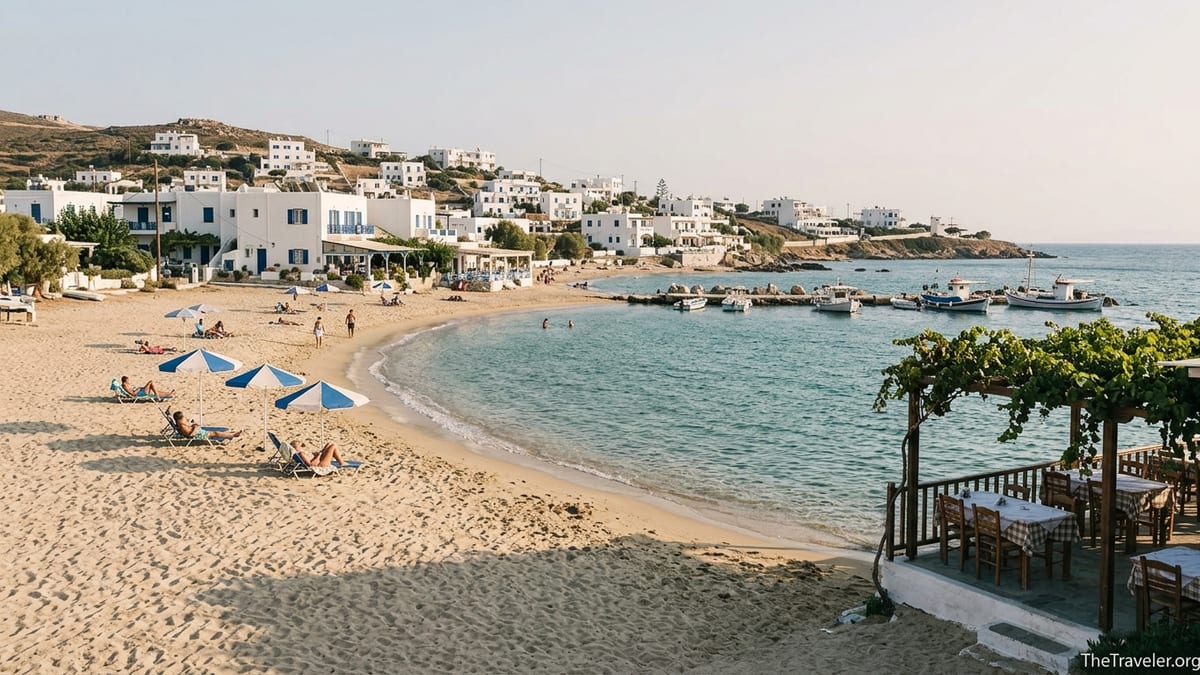
Beach costs themselves are manageable. Many stretches of sand on Naxos, including long sections of Plaka, remain essentially free to use. Organized sections with sunbeds and umbrellas usually charge for a set, but prices are often lower than on the most famous Mykonos or Santorini beaches. If you want to save, bring a simple foldable mat or towel and sit slightly away from the paid sections. With clear water, shallow entry and long sweeps of sand, Naxos delivers the classic Cycladic beach experience without the price shock.
Paros and Antiparos: Cycladic Charm on a Midrange Budget
Paros sits in a middle ground between Naxos-style value and Mykonos-style buzz. Prices in the most popular village of Naoussa have risen in recent years, especially for boutique hotels close to the harbor, but the island still offers plenty of midrange and budget options in Parikia, Piso Livadi and along the east coast. In June or late September, simple rooms or guesthouses can often be found from around 70 to 90 euros per night in these areas, while characterful small hotels might start nearer 110 to 140 euros in the heart of Naoussa in peak season.
Eating out on Paros can be as affordable as you choose to make it. Waterfront tavernas in Naoussa’s inner harbor tend to charge more for their views, and you might see mains from 18 to 25 euros and cocktails edging into double digits. Walk a few streets back or dine in Parikia and you are more likely to find mains in the 12 to 16 euro range and house wine at comfortable prices. Gyros shops and bakeries selling spanakopita and cheese pies keep lunch below 10 euros per person if you are watching your spending.
Transport around Paros is straightforward. In summer, buses connect Parikia, Naoussa, the east-coast villages and popular beaches like Golden Beach for just a few euros per ride. A small rental car, booked early for June or September, might cost roughly 40 to 55 euros per day, with scooters slightly less. A budget saving tactic is to skip the car on days you stay near your base village and only rent for one or two focused days of exploration. Short local ferries link Paros to nearby Antiparos, where you can base yourself in a quieter town and still enjoy easy access to Paros’s larger network.
Antiparos itself has a relaxed, low-rise feel and fewer luxury properties, which helps keep prices more grounded. Simple studios a short walk from the main street and beach, especially outside August, can sometimes be found in the 60 to 90 euro range, giving you a comfortable base within reach of both islands’ beaches, tavernas and hiking trails. The combination of Paros and Antiparos is appealing for travelers who want a Cycladic atmosphere, good food and swimmable beaches without stepping into the price tiers seen on Santorini’s caldera rim.
Milos and Serifos: Beach-Hopping Without the Price Tag
Milos has risen in popularity thanks to its photogenic coves, especially the lunar-like rock formations at Sarakiniko. Even so, it remains more affordable than Santorini or Mykonos for most categories. Accommodation is concentrated in Adamas, Plaka and Pollonia, with a wide spectrum of family-run pensions and apartments. In shoulder season, simple doubles can often be booked from around 70 to 100 euros per night in Adamas, with slightly higher rates for boutique options in Pollonia or rooms with sea views. As on other islands, August is the most expensive month, and booking several months in advance is wise if you want better prices.
Food on Milos is broadly in line with Naxos and Paros. Casual waterfront tavernas in Adamas might offer grilled fish by weight, baked dishes like moussaka, and local specialties such as pitarakia (cheese pies), with most mains between 12 and 18 euros. Coffee and pastry breakfasts can stay under 8 euros per person if you lean on bakeries rather than sit-down brunch spots. Because Milos is relatively compact, many travelers choose to rent a car or quad bike to access beaches like Firiplaka, Tsigrado and Fyripla, which are not all well served by buses. Small cars may cost around 40 to 60 euros per day in peak season.
Serifos, by contrast, remains primarily a Greek family destination with fewer international package deals. This works in your favor if you are watching your budget. Most accommodation is clustered around Livadi port and Livadakia beach, where basic studios a short walk from the sand can often be found around 50 to 80 euros per night in June or September. Even in August, Serifos usually undercuts the headline rates of Santorini, since there are fewer high-end boutique hotels.
On both islands, beach costs are modest. Many of the best beaches, such as Sarakiniko on Milos or Agios Sostis on Serifos, are entirely free to access, and you can simply lay a towel on the sand or rocks. When umbrellas and sunbeds are available, prices for a set are often more reasonable than the high-profile beach clubs of Mykonos. One realistic way to save across a week-long beach trip is to mix two or three days of paid loungers with several days sitting on your own mat, funneling the savings into better dinners instead.
Small Cyclades and Lesser-Known Islands: Lowest Overall Spend
If you want to minimize your daily spend without sacrificing the basics of sea, sun and Greek food, the Small Cyclades and a few lesser-known islands often offer the lowest overall costs. Islands such as Iraklia, Schinoussa, Donousa and Koufonisia are typically reached via Naxos, and many travelers spend a few nights on one of them as a quiet extension to a larger-island itinerary. Accommodation there is simple but appealing: think whitewashed rooms, balcony chairs and the sound of waves rather than pools and spas.
Approximate prices on these islands vary, but in May, June and late September you may find doubles in family-run pensions from around 45 to 70 euros per night, sometimes including a light breakfast. Even in July, many small-island properties remain in double digits rather than triple. Food follows suit. A beachfront taverna plate of grilled sardines or calamari might be priced slightly lower than on more famous islands, and house wine is usually inexpensive. With limited nightlife and shopping, it is also harder to spend impulsively, which naturally keeps your trip budget in check.
The main trade-off is ferry frequency and flexibility. Small Cyclades islands have fewer daily connections, especially outside peak season, and severe weather can disrupt schedules. This means you should avoid tight same-day international flight connections and build some slack into your itinerary. Still, once you are settled, daily costs are low. You may not need a car at all, since many beaches and villages are reachable on foot, which eliminates rental, fuel and parking costs entirely.
Other lesser-known Cyclades such as Sikinos or Kimolos share a similar profile: modest but characterful accommodation, very quiet evenings, and a local clientele. They suit travelers who prioritize unspoiled landscapes and long swims over nightlife and shopping. Build one or two of these islands into a larger hop, and your average nightly spend across the trip will usually drop compared to an itinerary dominated by headline islands.
Ferries, Cars and Local Transport: Where to Save and Where Not To
Ferries are the backbone of any Cyclades itinerary, and understanding how prices work can save you significant amounts. On major routes such as Piraeus to Naxos, Paros or Santorini, you typically have a choice between conventional ferries and faster high-speed catamarans. The slower boats are often substantially cheaper for deck or economy seats and can cost roughly two-thirds of the high-speed price on the same route, at the expense of a few extra hours of travel. For example, a slower ferry from Piraeus to Naxos in summer might be in the ballpark of 40 to 50 euros for a basic seat, while a high-speed can climb above that figure quite quickly.
Between islands, short routes such as Naxos to Paros, Naxos to Small Cyclades or Paros to Antiparos remain relatively affordable, with one-way tickets commonly under 20 euros for a standard passenger in 2026. Many budget-conscious travelers design their route around these shorter hops rather than repeatedly returning to the mainland. Buying tickets a bit in advance during July and August helps secure better departure times, but there is generally no need for complicated bookings months ahead for every leg, especially on less-trafficked routes.
Car rental is another cost to weigh carefully. A small car on a large island like Naxos or Paros can be worth the expense if you plan to visit several remote beaches and inland villages, but you can often cut costs by renting for only a portion of your stay. For instance, on a six-night Naxos trip, you might rely on buses and walking for four days and hire a car for just two, saving perhaps 150 to 200 euros versus keeping a vehicle parked for the entire trip. On smaller islands with limited bus service, negotiate a short rental with local agencies, especially in shoulder season, rather than defaulting to an entire week.
Buses and local boats are the sleeper tools of a budget-conscious Cyclades trip. Many islands offer reliable summer bus networks linking ports with major beaches and villages, with tickets generally in the 2 to 3 euro range per ride. On some islands, small taxi-boats shuttle between clusters of beaches for modest fees, effectively giving you a “beach hop” without a rental car. Before you arrive, check the latest season’s bus and boat schedules for your chosen islands so you can decide realistically whether you truly need a car, or whether you can reserve that money for better food and lodging instead.
Practical Strategies to Lower Your Cyclades Trip Costs
Once you understand where the money goes, the savings become fairly mechanical. The first and most impactful choice is timing. If you can travel in early June or mid to late September instead of early August, you often benefit from noticeably lower room rates, calmer ferries and more relaxed tavernas. The sea is usually warm enough for comfortable swimming in both months, and most seasonal businesses are fully open. For a typical couple staying ten nights, that seasonal shift alone can easily save several hundred euros in accommodation costs.
The second lever is island selection. A classic pairing might be a few nights on Santorini for the views, followed by a longer stay on Naxos or Paros where nightly rates are lower. Another approach is to skip Santorini and Mykonos entirely and divide your time between Naxos, Paros and one smaller island like Serifos or Koufonisia. By keeping your longest stays on islands where decent rooms still exist under about 100 euros per night in high season, you bring down the average nightly cost of the entire trip.
Self-catering is a third, often overlooked trick. Studios with kitchenettes allow you to buy breakfast items, fruits, yogurt and snacks from local supermarkets and bakeries. Instead of three meals out, you might eat one full taverna dinner and one casual lunch out each day, while preparing a simple breakfast and a few picnics. Over ten days, that can mean the difference between spending, for example, 70 euros per day on food versus 40 to 50 euros, without ever feeling deprived of Greek flavors.
Finally, be deliberate with “status” expenses. A single sunset cocktail at a caldera bar in Oia or a one-day splurge at a well-known beach club in Mykonos can be a memorable treat. What blows budgets is repeating those premium experiences every day. Decide in advance where you want to spend more and where you are happy to keep things simple. A sunset picnic on a public viewpoint or an afternoon under your own umbrella on a free-access beach delivers the same sky and sea at a fraction of the cost.
The Takeaway
Traveling the Cyclades on a budget in 2026 is less about secret tricks and more about informed choices. If you treat accommodation and timing as your main cost levers, use ferries intelligently and lean on the islands where Greeks themselves vacation, you can enjoy long days on the sand, generous plates of local food and atmospheric old towns without high-end price tags.
In practical terms, that often means favoring islands like Naxos, Paros, Milos, Serifos and the Small Cyclades over a full week in Santorini or Mykonos, or at least balancing a short stay on those headline islands with longer nights where rooms and everyday expenses are lower. Combine that with flexible travel dates, a willingness to ride local buses and the occasional home-cooked breakfast, and the Cyclades become not just a dream destination but a realistic one for a wide range of travelers.
FAQ
Q1. Which Cyclades island is generally the cheapest for a first-time visitor?
For many travelers, Naxos offers the best balance of low to midrange accommodation prices, excellent beaches, good food and regular ferry connections, making it one of the most affordable all-round choices.
Q2. How much should I budget per day on a cheaper Cycladic island?
A careful but comfortable budget on islands like Naxos, Paros or Serifos might be in the region of 60 to 100 euros per person per day, including simple accommodation, meals, local transport and small extras, excluding flights.
Q3. Are Santorini and Mykonos ever affordable?
They can be more affordable if you travel in May, June or late September, stay in non-view villages such as Perissa, Kamari or areas outside Mykonos Town, and limit high-priced extras like beach clubs and cocktail bars.
Q4. Is it cheaper to book accommodation in advance or last minute?
On the Cyclades it is usually cheaper and safer to book several months ahead, especially for June to September, because the best-value studios and family pensions often sell out before any last-minute discounts appear.
Q5. Do I really need a rental car on the cheaper islands?
Not always. On larger islands a car can be useful for a few days, but you can often rely on buses and walking for much of your stay. On small islands many beaches are reachable on foot, so you may not need a car at all.
Q6. How can I save money on ferries between the islands?
Choose slower conventional ferries instead of high-speed ones where possible, focus on shorter inter-island routes rather than repeated long hauls, and avoid booking peak weekend sailings in August if your dates are flexible.
Q7. Are food and drink significantly cheaper on lesser-known islands?
Food and drink are often slightly cheaper on islands with more local visitors and fewer luxury venues. You can keep costs down further by eating at simple tavernas, using bakeries and avoiding daily cocktails in high-end bars.
Q8. When is the best time to visit the Cyclades for both price and weather?
Early June and mid to late September usually offer a strong combination of lower prices, warm seas and mostly reliable weather, with fewer crowds than in late July and early August.
Q9. Which small Cyclades islands are good for a very low-key, low-cost stay?
Islands such as Iraklia, Schinoussa, Donousa and Koufonisia are popular with budget-conscious travelers looking for simple rooms, quiet beaches and a slower pace, often at lower daily costs than larger islands.
Q10. Is island hopping more expensive than staying on one island?
Island hopping adds extra ferry tickets, but if you choose shorter routes and spend more nights on cheaper islands, your overall budget can still compare well with a single-island stay on a very expensive destination.