


Naoussa, in Central Macedonia, is one of those wine places that doesn’t announce itself with shiny tasting rooms or big-bus theatrics. It wins you over more quietly: a cool breeze off Mount Vermion, the crunch of pale stones underfoot, the scent of wet leaves near a cellar door, and then that first sip of Xinomavro, all sour cherry and dried tomato, tannin and lift. I came in expecting a “Greek Barolo” cliché. I left with purple-stained teeth, a notebook full of vineyard names, and a bottle I genuinely didn’t want to check in luggage because I wanted it beside me the whole flight home.
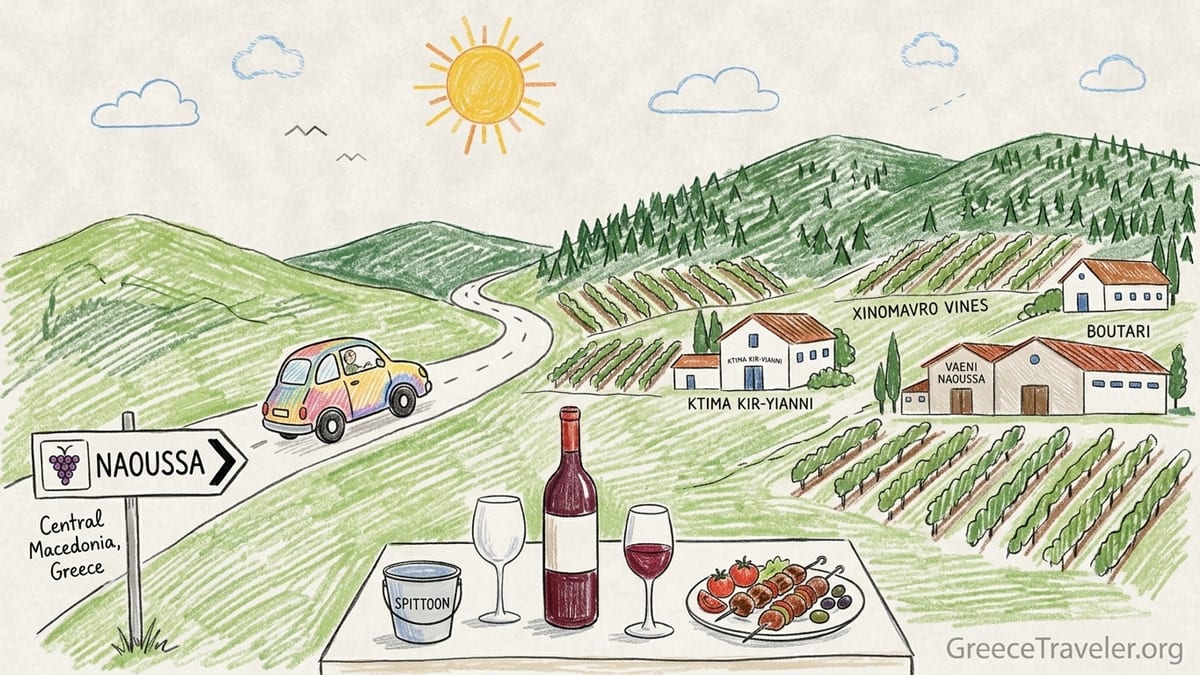
Getting To Naoussa, And Why The Journey Sets The Tone
I based myself in Thessaloniki and treated Naoussa as an easy wine-country escape. The simplest way for most travelers is to land at Thessaloniki Airport and then go overland: it’s roughly an hour and change to reach Naoussa depending on traffic, and the last stretch starts to feel distinctly agricultural, with orchards and low hills giving way to the greener, forested presence of Mount Vermion.
I rented a small car in Thessaloniki and drove. That choice shaped the trip in practical ways: it let me reach wineries tucked into village edges and vineyard slopes, but it also forced me to be disciplined at tastings. In Naoussa, tasting flights are not “just a splash” if you’re genuinely paying attention. Xinomavro can be deceptively light in color while still being firm, drying, and high-acid. I found myself spitting more than I typically do on city tastings, simply because I wanted to keep visiting through the afternoon without turning the drive back into a stress test.
Naoussa’s tourism messaging is unapologetically wine-forward. Central Macedonia’s tourism authority describes Naoussa as the “City of Wine and the Vine,” emphasizing a long tradition and the local identity built around grapes and cellar culture. That framing felt accurate on the ground: even if you’re not in a tasting room, you’re in a place where wine is part of local conversation, local pride, and local weekend plans.
First Impressions In The Vineyards: Vermion Slopes, Airy Light, And Xinomavro’s Mood
The Naoussa PDO zone was established in 1971, and you feel the seriousness of that history when you stand in the vines. The landscape isn’t dramatic in a jagged, postcard way. It’s more quietly persuasive: rolling slopes, a cooler Mediterranean feel, and a patchwork of parcels that look like they’ve been tended by families for generations. The region’s official tourism descriptions lean into the unspoiled nature, mountain slopes, and climate that help Xinomavro thrive, and it matches what your senses pick up when you step outside the car.
In the morning, the air felt cleaner and cooler than I expected for Greece in late season travel. I kept catching that scent you only get near cultivated land with trees nearby: damp soil, crushed leaves, and the faint sweetness of fruit from surrounding orchards. Xinomavro itself seems to mirror that edge between fruit and earth. Even before you taste, the place suggests a wine that won’t be simple.
I also learned quickly that “Naoussa” is not a single uniform taste. If you’re trying to understand Xinomavro, a tour that strings together multiple producers is valuable, but only if you plan it so you’re not rushing or driving aggressively between appointments. The villages around Naoussa matter, the exposures matter, and the winemaking philosophies matter. The grape is consistent in its structure, but the expression changes.
Visit 1: Ktima Kir-Yianni, Where Xinomavro Meets Precision
Ktima Kir-Yianni was my anchor visit because it’s set up for travelers who want more than a quick sip. Their Naoussa visit offerings emphasize guided tours, multiple tasting formats, and options that combine wine with food menus, with clear messaging that certain experiences are strictly by reservation only. On the day I visited, the estate felt like a working place first and a hospitality space second, which is exactly what I want in a wine region.
The approach to the estate winds through countryside that gradually lifts toward Mount Vermion. At the tasting area, the view opens up into vineyard contours and green folds of land that make you understand why the site is described as “rolling slopes.” A guide walked me through the production spaces and talked in a matter-of-fact way about Xinomavro’s local importance, without romantic overstatement. That tone matched the wines: structured, intentional, and detailed.
One of the most memorable parts wasn’t even a finished wine. Kir-Yianni has promoted a “From Vine to Glass” experience that moves through stages of the process, including fresh grapes, must, fermenting must, and the finished wine, with a published price of 25 euros per person for that specific program. Tasting fermenting must in situ recalibrated my brain: you sense the raw material that will later become the grape’s signature combination of tang, savory edge, and grip.
In the glass, I focused on their Xinomavro from Naoussa because I wanted a clean benchmark. What hit me first was aroma: sour cherry, something like sun-dried tomato, and a herbal note that reminded me of dried oregano you rub between your fingers over a hot pan. The tannins weren’t heavy in an alcoholic way. They were firm and fine, like the wine was tightening around my gums. Younger Xinomavro here felt nervous, lifted, and strict, while older examples, tasted later on this trip, would soften into leather, dried rose, and deeper savory complexity.
Visit 2: Vaeni Naoussa, A Cooperative Lens On The Region
Vaeni Naoussa offered a very different kind of education: not the single-estate story, but a cooperative perspective. The winery’s own visitor information positions it clearly: it sits on the Veroia to Edessa road at the foot of Naoussa, around an hour from Thessaloniki, and it’s close to regional points of interest like the Macedonian Tombs of Lefkadia and Vergina. That geography matters if you’re building an itinerary that mixes wine with archaeology and small-town wandering.
I booked ahead and arrived with the mindset that cooperatives can sometimes feel industrial. Vaeni surprised me with how approachable the visit felt. Their published guided tour, without tasting, is described as about 45 minutes, which is useful if you’re trying to stack visits without turning your day into a marathon. In the cellar spaces, I paid attention to smell: cooler air, a faint yeastiness, and that clean, slightly dusty aroma that comes from moving between barrel and tank zones.
Tasting Xinomavro in a cooperative setting helped me understand “regional typicality” in a non-theoretical way. The wine still carried the grape’s hallmark acidity and tannin, but the overall impression leaned more toward an immediately drinkable shape. The fruit read as red cherry rather than black fruit, and the savory notes felt more like tomato leaf and dried pepper than outright leather. This was the version of Xinomavro I’d recommend to a traveler who wants to love the region but doesn’t necessarily want to wait a decade for the wine to unwind.
If Kir-Yianni taught me precision and process, Vaeni taught me scale and context. It also taught me that not every traveler needs a long, private tasting to come away with something useful. A well-run cooperative visit can be one of the most time-efficient ways to “get” a region.
Visit 3: Boutari Naoussa, History In A Glass You Can Actually Taste
Boutari is one of the names that comes up immediately when you talk about Naoussa because the winery’s own materials frame the region as its headquarters and emphasize its role as one of Greece’s historic wine producers. Visiting after two very different experiences helped me triangulate what Naoussa feels like when legacy is part of the brand story.
The tasting itself brought me back to the core question I’d been asking all day: what does Xinomavro actually smell and taste like when it’s not described by someone else’s adjectives? In front of me, it was tart cherry skin, dried tomato, and a savory, almost olive-like depth that showed up as the wine warmed. I wrote down “rose petals” too, but not fresh rose. Dried rose in an old book, pressed flat between pages.
Structurally, the wine’s acidity felt like the spine. It’s the kind of red that makes your mouth water even as the tannins dry your gums. That contradiction is part of why the grape is so food-friendly. If I had to explain it to a traveler in one line, I’d say Xinomavro tastes like it wants you to order dinner.
I also appreciated having direct contact details available for planning. Boutari lists a Naoussa winery email contact on its site, which matters because Naoussa is not a region where you can assume every tasting room runs like a walk-in bar. Even when a winery is established, scheduling is still the polite and often required way to visit.
How Xinomavro Changed From Young To Aged, And The Bottle I Wanted To Take Home
I came to Naoussa thinking I would prefer older wines because the grape’s reputation leans tannic and age-worthy. I still love the aged profile, but I left with a more nuanced craving. Young Xinomavro, when it’s made with care, is thrilling in a different way: pale-to-medium ruby color, sharp red fruit, herbal edges, and tannins that feel like a firm handshake. It can come off severe if you’re drinking it without food, but with the right plate it becomes energetic rather than harsh.
Aged Xinomavro felt like the lights dimmed and the room got quieter. The fruit moved from fresh cherry to dried cherry and tomato paste. The herbal side became more like dried tea leaf. The tannins didn’t disappear, but they integrated. The overall impression was less about tension and more about endurance. When people call it “complex,” this is the kind of change they mean, not some vague luxury-word.
One specific bottle I personally wanted to take home was a Naoussa PDO Xinomavro that leaned into savory elegance rather than sheer power, the kind of wine you could open with roast meat but also with something as simple as lentils and a lemony salad. My favorite expression on this trip was the one that balanced dried tomato and cherry with a lifted, floral finish. It felt like Naoussa itself: composed, not flashy, and quietly persistent.
In practical terms, I would choose a bottle that is already drinking well if you’re traveling, because luggage temperature swings and short-term travel handling aren’t ideal for wines you intend to cellar for years. If you do want something age-worthy, buy it at the winery and transport it thoughtfully, and then let it rest at home before opening.
What I Ate With Xinomavro, And Why Food Is The Secret To Loving It
On this trip, the wines that impressed me most were the ones I tasted with food, even if it was a simple pairing rather than a full menu. Kir-Yianni, for example, explicitly offers wine-and-food menus and emphasizes that certain pairing formats are strictly by reservation. That matters because Xinomavro is not a grape that always flatters itself on an empty stomach.
My favorite match was a classic Naoussa-style approach to meat and savory dishes: grilled or roasted meats, sausages, and anything with tomato-based depth. Xinomavro’s acidity cuts through fat, and the tannins love protein. Even the grape’s signature “tomato” note feels less strange and more inevitable when there is tomato on the plate. I also liked it with dishes that include eggplant and char, because the wine’s herbal side echoes smoky bitterness.
If you’re vegetarian, don’t assume Naoussa is a “meat only” pairing destination. Xinomavro can be beautiful with lentils, mushroom dishes, and bean stews, especially if there’s olive oil richness and a little acidity in the meal. The wine’s structure holds up, and the savory profile makes plant-based foods taste deeper.
The other key is temperature. Slightly cooler than room temperature made every Xinomavro taste more vivid and less stern. In Naoussa’s cooler-influenced setting, that serving style feels natural, but in summer heat or warm indoor dining, it can make the wine feel heavier than it is.
Self-Driving Vs. Tours: When Convenience Becomes A Real Problem
Self-driving in Naoussa is possible and, in some ways, ideal. Distances between wineries are manageable, and you can shape the day around your own pace. But after doing it, I’d call it convenient only if you plan conservatively and keep your winery count realistic. Three visits in a day with proper tours and tastings already feels full. If you try to push to four or five, the day becomes a schedule, not a pleasure.
The bigger issue is not navigation. It’s alcohol management. Even small pours add up, and Xinomavro’s tannin and acidity can trick you into thinking you’re “fine” because you don’t feel sweetness or heat. If you want to taste seriously, you need to spit consistently, drink water constantly, and eat. That’s doable, but it takes willpower, and it’s not everyone’s idea of fun on vacation.
This is where a tour or driver becomes more than a luxury. If you’re traveling with friends, splitting the cost of a local driver can turn the day into something you remember for the wines, not for the concentration required to stay safe. A driver also lets you buy bottles without worrying about how they’ll slide around in the trunk as you take mountain curves.
The other inconvenient reality is booking windows and opening hours. Naoussa is a working wine region, not a strip of tasting rooms that are always open. Multiple sources aimed at visitors note that many wineries require pre-booking for tours and tastings. If you’re self-driving and improvising, you may end up parked outside a closed gate. Planning ahead, and confirming by email or phone, made my day smoother.
The Takeaway
Naoussa rewarded me most when I treated it like a place, not a checklist. The vineyards around Mount Vermion explain Xinomavro’s tension and lift. The cellars explain its patience. And the people pouring it tend to speak about it with a blunt pride that feels earned. I visited Ktima Kir-Yianni for a structured, sensory experience that made the winemaking stages tangible, Vaeni Naoussa for a cooperative perspective that clarified regional style, and Boutari for a sense of legacy that still tastes current in the glass.
Xinomavro, to me, smelled like sour cherry, dried tomato, and dried herbs, with a floral echo that showed up more clearly as the wines aged. Young versions felt strict and energetic; aged versions felt quieter, more layered, and more like a long conversation than a first impression. And the best moments happened when the wine met the table: savory dishes, tomatoes, grilled meats, lentils, mushrooms, olive oil, and that general Macedonian instinct for food that doesn’t need to be fussy to be good.
If you’re deciding between self-driving and a tour, my honest conclusion is this: self-driving works for one or two wineries with a light tasting mindset, but it becomes inconvenient and less safe when you want to visit several producers and taste properly. Naoussa deserves your full attention, and a driver can be the difference between a day that’s merely efficient and a day that’s genuinely joyful.
Finally, keep an eye on Naoussa’s event calendar if your trip overlaps with festival season. Central Macedonia’s tourism authority has promoted “Naoussa – City of Wine 2026” as a major celebration focused on Xinomavro. If you time your visit well, you can taste more producers in one weekend than you could usually schedule across several normal days.
FAQ
Q1. What is Xinomavro supposed to taste like in Naoussa?
In Naoussa, I found Xinomavro often shows sour cherry, dried tomato, dried herbs, and a firm, drying tannin structure with mouthwatering acidity.
Q2. How far is Naoussa from Thessaloniki?
Naoussa is roughly a little over an hour by road from Thessaloniki, making it realistic for a day trip, though an overnight stay feels more relaxed.
Q3. Do I need to book winery tastings in advance around Naoussa?
Yes, advance booking is commonly required. Many wineries request reservations for tours and tastings, and some food-and-wine experiences are strictly by reservation.
Q4. How much does a tasting cost at Ktima Kir-Yianni?
Kir-Yianni has promoted a “From Vine to Glass” tasting program priced at 25 euros per person, and it also offers multiple other tasting and pairing options.
Q5. Is Vaeni Naoussa worth visiting if I’ve never toured a cooperative winery?
Yes. Vaeni offers a cooperative view of the region, and it can be a time-efficient way to understand Naoussa’s broader wine culture beyond a single estate.
Q6. How long should I plan for a winery visit in Naoussa?
Plan about 60 to 120 minutes per winery if you’re doing a tour plus tasting. Vaeni notes a guided tour without tasting of about 45 minutes.
Q7. What foods pair best with Xinomavro in Naoussa?
Xinomavro pairs especially well with savory foods: grilled meats, sausages, tomato-based dishes, lentils, mushrooms, and olive-oil-rich plates.
Q8. Is self-driving a good idea for a Naoussa wine day?
It can work for one or two wineries if you spit and eat, but it becomes inconvenient when you try to visit several wineries and taste properly.
Q9. What is “Naoussa – City of Wine 2026”?
It is a wine-focused event promoted by Central Macedonia’s tourism authority, centered on Naoussa’s identity as the home of Xinomavro and wine tourism.
Q10. What’s the best way to choose a bottle to bring home?
Pick a bottle that tastes balanced and enjoyable at the winery, consider travel conditions, and ask the staff whether the wine is meant for early drinking or long aging.